


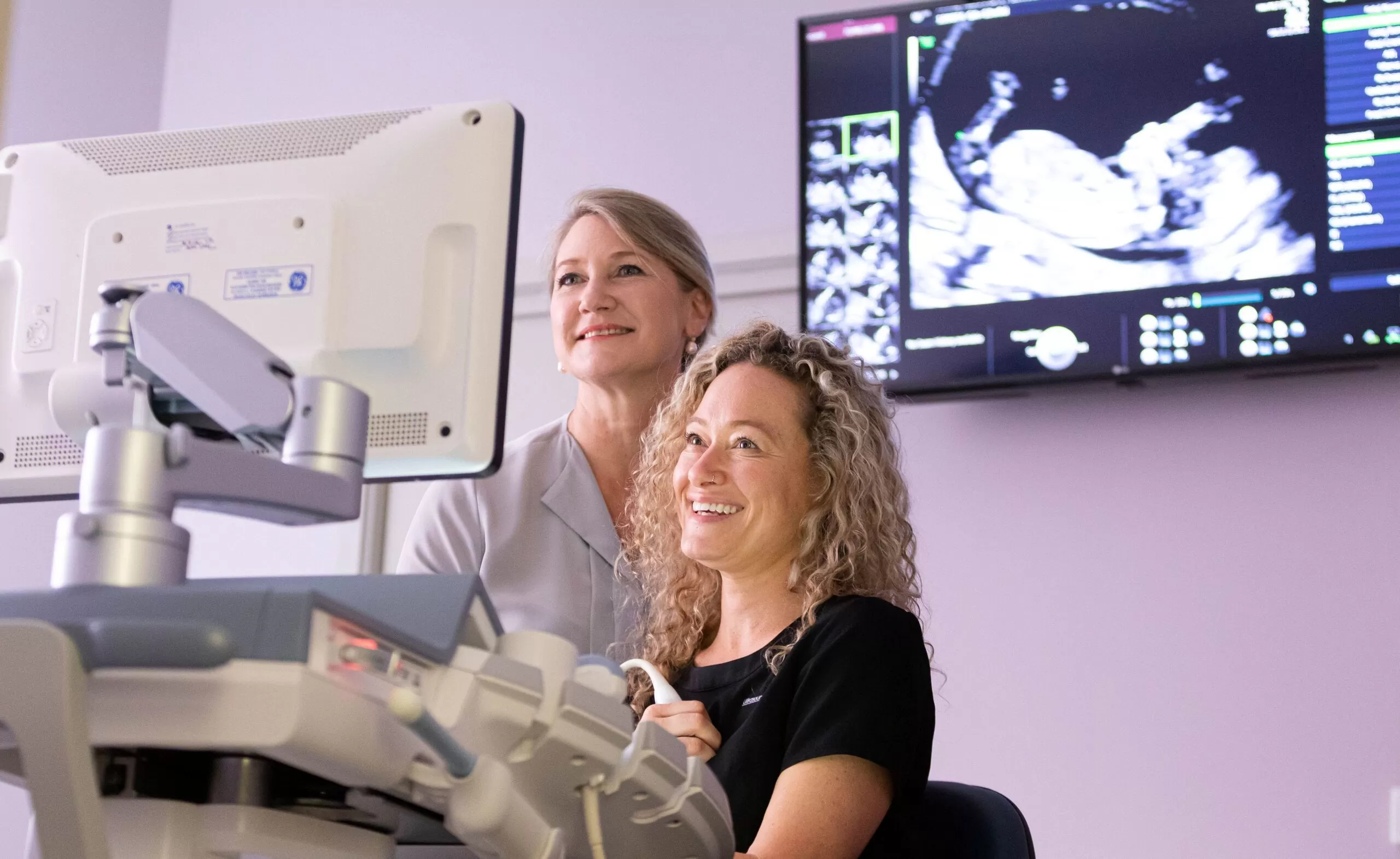

Fetal Growth Scan
What is a fetal growth scan?
A fetal growth scan is frequently requested by your doctor or midwife in the third trimester of pregnancy and is a useful means of checking on your developing baby’s growth and well-being. Ultrasound Care’s team of obstetricians and sonographers are trusted experts in pregnancy ultrasound which is why you have been referred to our practice for this important scan.
Why will you be referred for a fetal growth scan?
Your doctor or midwife will refer you for a fetal growth scan for any of the following reasons:
- If you think that the baby’s movements have changed or stopped.
- If it is suspected that the baby is small for dates or large for dates.
- If there is a suspected breech presentation.
- If you have experienced unexpected bleeding or contractions.
- If you have a multiple pregnancy.
- If you have a maternal disease like diabetes, high blood pressure, kidney or heart disease that may affect your baby.
What does the fetal growth scan show?
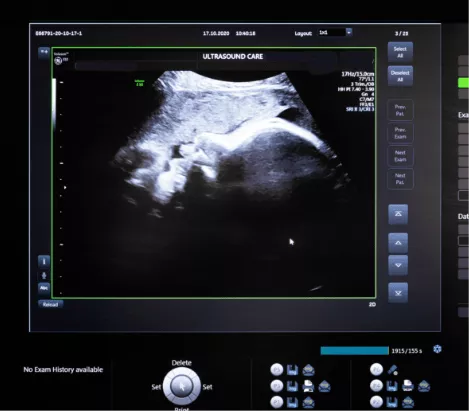
The fetal growth scan allows the Ultrasound Care specialist obstetrician to see:
- That the fetal heart is beating.
- The fetal presentation and position.
- The fetal size and growth.
- The volume of amniotic fluid around the baby.
- The position of the placenta.
- The blood flow to the baby through the umbilical cord.
- That the activity and movements of the baby are normal.
- The length of your cervix.
- The position of any uterine fibroids.
What does a fetal growth scan involve?
You don’t need to have a full bladder to undertake the scan. In fact, it is better if it isn’t completely full.
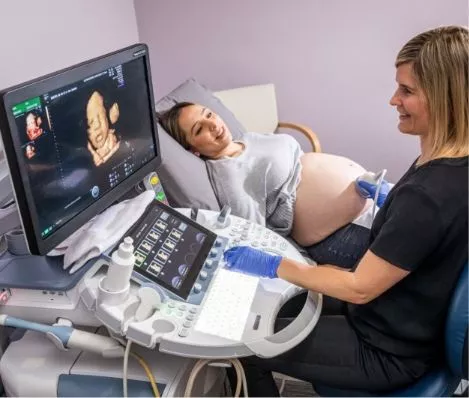
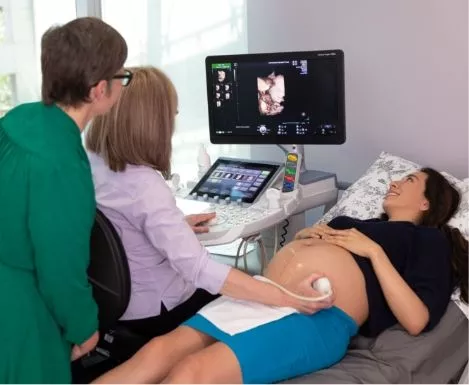
When you come into the scan room, our sonographer will apply some slippery gel onto your tummy and then place an ultrasound transducer on your abdomen. The gel is needed for the ultrasound beam to penetrate into the tummy and it allows the transducer to move around easily across your abdomen with the aid of the gel. The whole scan takes around 20-30 minutes.
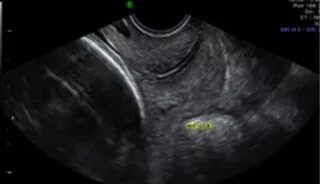
Occasionally at the end of the abdomen scan examination, we may need to do a trans-vaginal scan to get a better look at the lower edge of the placenta and its relationship to the cervix. A trans-vaginal scan is also more accurate in measuring the length of the cervix than a trans-abdominal scan. This scan is conducted when you have emptied your bladder.
What if the scan shows that something is wrong?
In most instances, the scan is reassuring. During your scan, your Ultrasound Care obstetrician and sonographer will be able to show you that the baby is well grown and has normal amniotic fluid volume and placental function.
However, if we are concerned about the findings of the scan, we will discuss this with you and will contact your doctor. The Ultrasound Care doctors are all fully qualified obstetricians and are highly experienced to interpret the findings of your scan and discuss this with your caregivers. In 3 of 100 women, we will diagnose a fetal anomaly that has not previously been apparent.
Occasionally we are so concerned that we recommend you go straight to your Doctor or the Delivery Suite.
Please be assured, if any problems are suspected, our care team will provide you with the opportunity to discuss the issues and their implications.
Absolutely! The Ultrasound Care sonographers are usually able to get some gorgeous photos of your baby for you. Just be aware that the picture is affected by the position of the baby and that maternal skin thickness and the amount of amniotic fluid around the baby’s face, can also affect the quality of the image. For example, if your baby’s head is down and facing your spine, we will only be able to see its back
Will the scan show the baby in 3Dd or 4D?
The best time for a great baby photo is from about 24 weeks gestation to 34 weeks gestation. Our team is always happy to do 3D and 4D scanning for you, but we also believe our priority is to discover if there are any problems with your baby.
The importance of the fetal growth scan
The Ultrasound Care team utilises the fetal growth scan to undertake a comprehensive assessment of your baby’s growth and wellbeing, because your baby’s health is our priority.
Please contact your local Ultrasound Care clinic. We have locations all over Sydney.